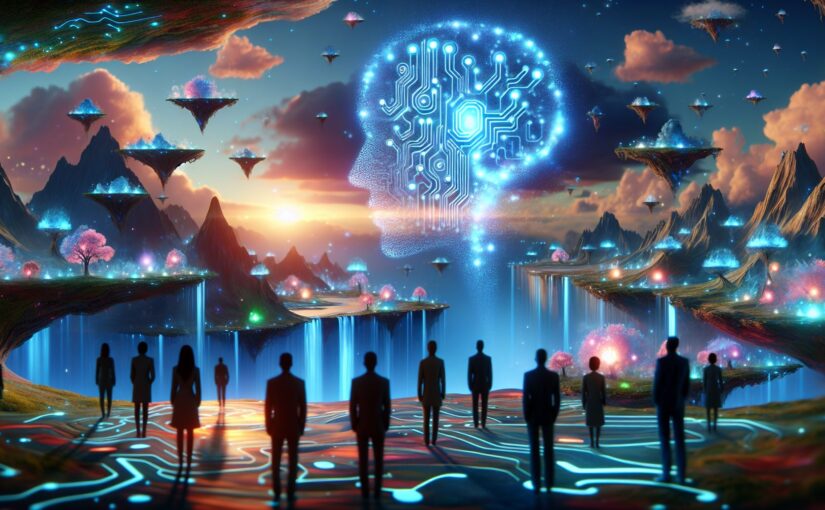
We’re living through something pretty wild right now. Artificial Intelligence isn’t just crunching numbers anymore—it’s making art, writing stories, and frankly, doing things that used to be our exclusive territory as humans. More creative people are jumping into AI tools, and honestly, the possibilities feel endless. Let me take you through what’s happening when human creativity collides with machine intelligence, especially in storytelling and the arts.
The Dawn of AI in Creative Arts
Machines making art? Five years ago, I would have rolled my eyes. But here we are, and it’s actually happening. We’ve completely flipped the script on creativity being this sacred human-only thing. Machine learning and deep learning have gotten so sophisticated that they’re not just mimicking creativity—they’re pushing its boundaries in ways we didn’t see coming.
I mean, AI paintings are selling at Sotheby’s for serious money. Algorithms are composing symphonies. The whole conversation around art is shifting from “humans versus machines” to “humans working with machines.” And honestly, that feels like a much more interesting story.
Parsing the Potential: What AI Brings to the Table
Here’s what’s fascinating about AI in creative work: it can spot patterns and generate stories by learning from everything it’s seen before. These algorithms process massive amounts of data and get better with each try. Take painting—an AI can study thousands of masterpieces throughout history and then create something that feels both familiar and completely new.
The startup scene around AI creative tools is absolutely exploding right now. Companies are building platforms where writers can team up with AI for outlining, research, and even full drafts. There are tools popping up everywhere that help generate artwork in specific styles or themes. It’s like a creative gold rush.
What gets me excited is how this democratizes creativity. You don’t need years of technical training or natural artistic talent anymore. Anyone can create something meaningful with AI as their creative partner or guide.
Storytelling: Partnering with the Imagination Machine
Storytelling has always been deeply human—it’s how we connect with each other. But AI is opening up new possibilities here, adding this layer of technological creativity that I find pretty magical.
AI-Powered Platforms for Writers
Writing used to be this solitary craft, but now we have AI assistants jumping in to help. Tools like Grammarly and ChatGPT are doing way more than just fixing grammar—they’re helping generate entire story arcs and character developments.
Think of AI as your creative sparring partner. It can suggest plot twists, character quirks, and story directions you might never have considered. These language models can generate dialogue or plot points based on whatever themes you throw at them. It pushes writers to explore different perspectives and chase down story threads they wouldn’t have found on their own.
Collaborative Creativity: Humans and Machines
The goal isn’t to replace human writers—that would be missing the point entirely. Instead, it’s about creating this partnership where AI brings fresh ideas to human creativity. I’ve seen AI algorithms that help craft scenario-based scripts. Writers set up the premise and characters, then AI helps by suggesting how conflicts might resolve or where emotional peaks should hit.
This collaboration makes storytelling better and broader, but it also invites people who never considered themselves “writers” to jump in and create. It’s like having a creative playground where anyone can experiment.
AI and Visual Arts: Painting with Pixels
The visual arts transformation is where things get really exciting. We’re already seeing AI-generated art competitions, and these pieces are winning recognition from traditional art communities—something that would have seemed impossible just a few years ago.
Generative Adversarial Networks (GANs)
GANs are probably the coolest tech development in AI art. They work by having two neural networks compete against each other—one creates images, the other criticizes them. Through thousands of rounds of this back-and-forth, the creator network gets incredibly good at making compelling art.
The results are stunning. GANs can produce hyper-realistic images and art pieces that actually make you feel something, just like traditional artwork does.
Ethical Considerations and the Soul of Art
But let’s be real—this raises some heavy questions. When a machine “learns” art by studying thousands of human-created works, what does originality even mean anymore? The heart of creativity has always been tied to human experience and emotion, and that’s what makes these discussions so complex.
People who support AI art see it as evolution rather than replacement. As AI becomes part of our daily lives, maybe its creative output reflects our collective hopes, fears, and dreams—like we’re all painting on the same canvas together.
Conclusion: The Future of Artificial Creativity
AI in storytelling and creative arts isn’t trying to overshadow traditional methods. It’s adding innovation to our natural human drive to create and share experiences. AI works as an amplifier for artistic expression, opening up this new era of collaboration with unlimited potential.
Where artificial intelligence meets creative arts, we get to imagine futures where the boundaries of art keep expanding. It unlocks human imagination in new ways, guided by the analytical power of our machine partners.
As AI-driven storytelling and artistic creation mature, we’ll get better at understanding, expressing, and communicating across cultural and linguistic barriers. This creates new possibilities powered by both silicon and human emotion. Embracing this future means being open to the unexpected and exploring creativity’s uncharted territories, moving toward this fascinating blend of human artistry and artificial intelligence.