The Election That Rewrote the German Playbook
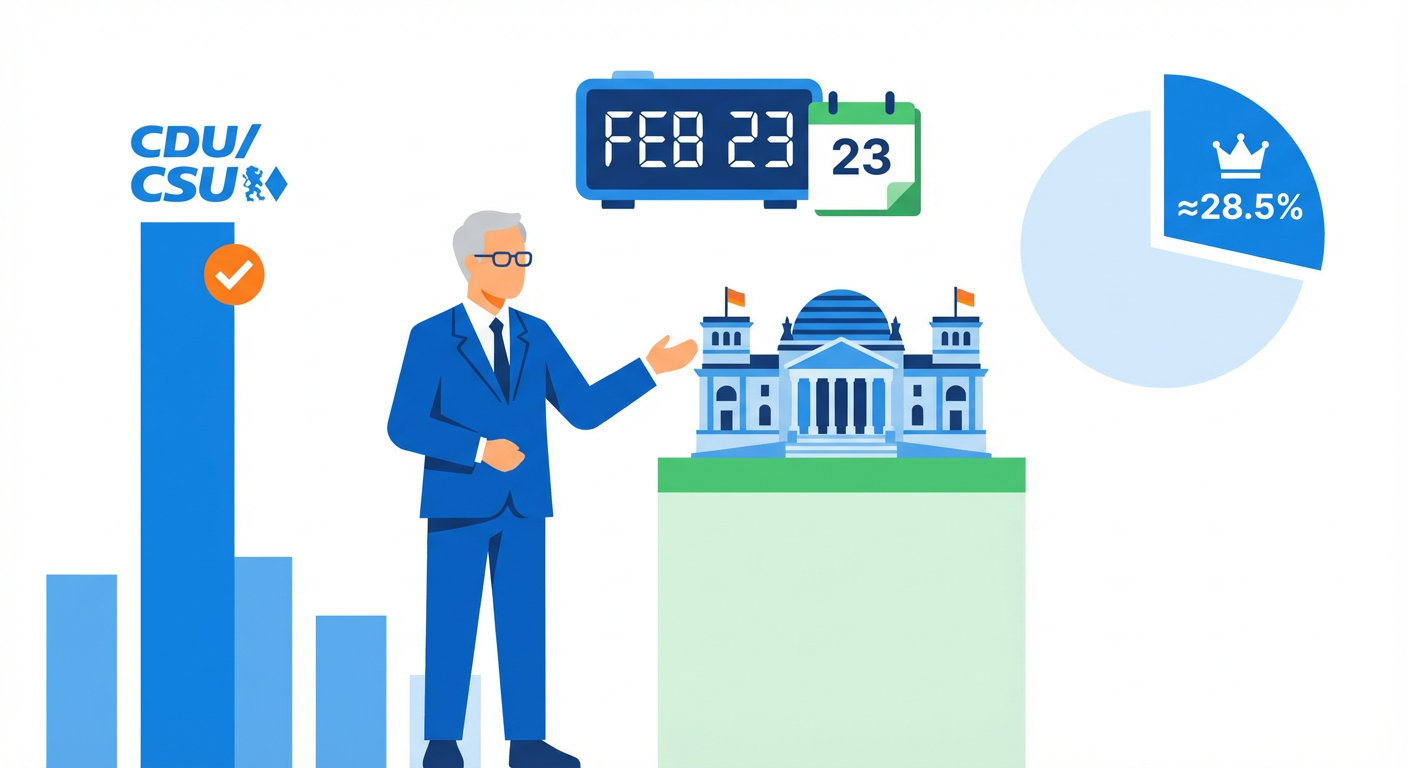
On February 23, 2025, German voters fundamentally altered the country’s political landscape. Friedrich Merz’s CDU/CSU bloc secured roughly 28.5% of the vote, making it the largest parliamentary force. But here’s what matters more than that number: what happened to everyone else. Scholz’s SPD crashed to approximately 16.4%, its worst federal result since World War II. That’s not just a loss. That’s the evaporation of an entire governing coalition.
The real shocker, though? The AfD landed second place with approximately 20.8% of the vote, its strongest-ever federal performance. For a country that built its modern democracy explicitly against extremism, this number demands serious attention. It signals something beyond normal electoral swings. It signals that roughly one in five German voters either feel abandoned by traditional parties or actively prefer the AfD’s political program. Check Bundestag Official 2025 Election Results if you want the granular breakdowns by state and district. The numbers are public for a reason.
Follow the Trust. It Leads Somewhere Dark.
Before we talk about what Merz does next, let’s talk about why German voters were so ready for a change. The Bertelsmann Foundation’s 2025 Democracy Index showed that public trust in federal institutions had dropped to 38% before the election. Thirty-eight percent. That’s the lowest recorded level in their tracking. When trust collapses that far, voters stop calculating strategically. They start voting against things instead of for them.
What drove this collapse? Cost of living didn’t help. The Ukraine war created genuine divisions. Immigration anxiety persists. But there’s a money trail here that matters. Real wages stagnated for years even as corporate profits climbed. Infrastructure investment fell behind Germany’s competitors. The pandemic response exhausted political goodwill. These aren’t opinion pieces. These are material conditions. When people can’t afford housing or see their neighborhoods change faster than they can process, they get angry. And when incumbents can’t credibly explain the tradeoffs, voters look for anyone offering a different direction.
The Coalition Nobody Wanted (But Everyone Expected)
Merz faced a mathematical reality. He couldn’t build a governing majority without either the Greens or the SPD. The Greens had been part of the collapsing traffic-light coalition. Voters punished them accordingly. The SPD was weakened but still viable. So in March 2025, Merz formed a grand coalition with the SPD. This is Germany’s oldest governing formula, and it’s politically exhausting for everyone involved.
Here’s where the economics get interesting. The governing agreement they negotiated included a massive 500 billion euro infrastructure fund. That’s half a trillion euros. But here’s the catch: it required a constitutional amendment to execute. Constitutional amendments in Germany demand a supermajority in the Bundestag and two-thirds support in the Bundesrat, plus serious political consensus. You can’t just declare one and move on. Which means Merz had to negotiate not just with the SPD, but with multiple state governments and potentially opposition parties.
Why spend that much money on infrastructure right now? Because German manufacturing is under pressure. Because roads, rail, and digital networks need modernization. Because infrastructure benefits businesses and workers simultaneously, making it theoretically popular across coalitions. Follow the incentives: SPD gets to claim they fought for public investment. CDU/CSU gets to claim they’re business-friendly and pro-growth. Germany’s industrial base gets upgraded. Everyone has a talking point for voters.
What This Means for Europe (And It Means a Lot)
Germany doesn’t just lead itself. Germany anchors the European Union economically and diplomatically. When Merz takes power, he doesn’t just lead 83 million Germans. He becomes one of the three or four most consequential political figures in Europe. That matters for NATO. It matters for EU trade policy. It matters for responses to Russia, China, and whoever comes next.
Merz is more hawkish on Russia than Scholz was. He’s more skeptical of immigration. He’s more aligned with the center-right across Europe. That shifts EU geometry. It potentially strengthens ties with Poland and the Baltics. It might create friction with France on some issues. It complicates relations with Hungary’s Orban. These aren’t abstract diplomatic moves. They affect defense spending, energy policy, trade agreements, and which countries lean on Germany for support.
The 500 billion euro infrastructure fund also signals something internationally: Germany believes it needs to spend money to stay competitive. That’s a reversal of the austerity-focused messaging Germany projected for a decade. Other EU nations are watching. What Germany does tends to get copied or contested.
The Voter Revolt Nobody Should Ignore
Let’s step back for a moment. One in five German voters chose the AfD. That’s politically significant. Some of those voters are protest voters angry at incumbents. Some hold genuine policy preferences that align with AfD positions. Some are afraid of immigration or economic change. The point isn’t to diagnose their psychology. The point is that traditional parties failed to persuade them.
Merz’s coalition can govern. The math works. But it doesn’t solve the problem that created the opening for the AfD in the first place. It doesn’t automatically restore trust in institutions. It doesn’t reverse wage stagnation or fix housing affordability or make people feel heard. Grand coalitions sometimes deepen voter frustration because they’re seen as technocratic and disconnected from real concerns. If Merz’s government delivers tangible improvements in infrastructure, competitiveness, and wage growth, it can rebuild trust. If it doesn’t, voters will remember that they tried it.
That’s not prophecy. That’s how democratic accountability works. Governments rise or fall based on whether they make life better for enough people. Right now, Germany’s political system just reset. Merz gets his chance to lead. German voters are watching closely to see what he does with it. If you want to understand European politics, follow Germany closely over the next two to three years. The trajectory matters far beyond Berlin.