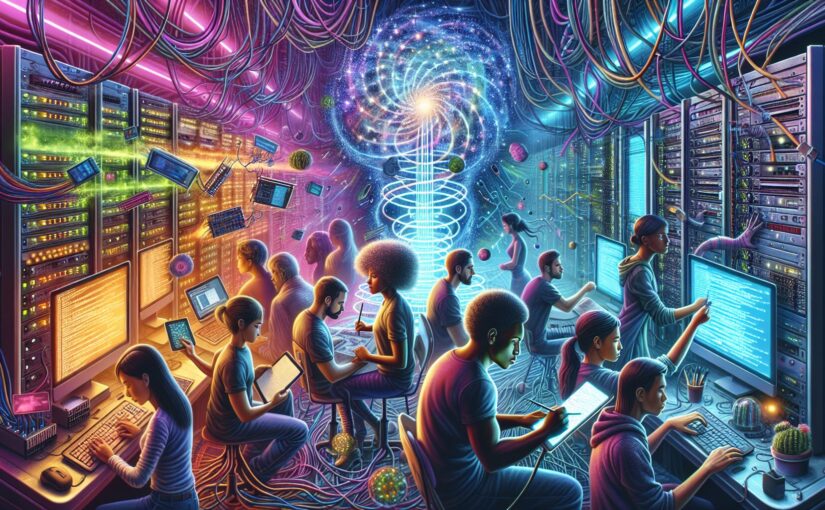
Art and artificial intelligence are colliding in ways that frankly blow my mind. We’re watching machines create things that used to be purely human territory. Let me walk you through how machine learning is changing art, writing, and design, and why I think this matters way more than the usual tech hype suggests.
The Dawn of AI Creativity
For years, AI felt like glorified calculators. Sure, they could crunch massive datasets and handle analytical tasks, but creativity? That seemed impossible. Then tools like GPT-4 and DALL-E showed up and completely flipped the script. Now AI isn’t just analyzing data, it’s actually creating things. Sometimes it’s a collaborator, sometimes it’s the one coming up with ideas first.
What gets me excited about this shift is how machine learning is breathing new life into creative processes that haven’t changed much in centuries. Artists can now explore ideas that would be impossible to execute by hand alone.
AI as the New Muse
Remember when inspiration was this mysterious thing that just struck randomly? Well, now we have algorithms that can spark ideas on demand. Take DALL-E. You type in “a Victorian robot reading poetry in a cosmic library” and boom, you get dozens of interpretations. Each one is different, but they all make sense. It’s making me rethink what we even mean by “original.”
Text Generation and Writing
The idea of a bot writing novels used to sound ridiculous. GPT-4 changed that conversation completely. This thing can write stories, articles, even help you work through writer’s block. I’ve seen writers use it to brainstorm plot twists or polish rough drafts.
What’s really happening here is a fundamental shift in how we approach writing. These tools let writers experiment with narrative styles and perspectives they might never have tried otherwise. It’s like having a writing partner who never gets tired and has read everything.
Artistic Imagery with Machine Learning
The art world has gone absolutely wild for AI tools. Platforms like DeepArt.io and Artbreeder let artists mix and match styles from different eras and movements. These systems learned from massive collections of artwork, so now users can blend Picasso with pixel art or combine Renaissance techniques with modern digital styles.
Here’s what I find most interesting: artists aren’t limited by their technical skills anymore. Someone who’s great with concepts but struggles with execution can now create complex visual pieces. This might be democratizing art in a way we haven’t seen since the invention of photography.
Collaborative Creativity: Humans and AI as Co-Creators
Let’s be clear about something: AI isn’t replacing human creativity. It’s amplifying it. The sweet spot is when human imagination meets machine processing power. That combination is producing work neither could create alone.
Expanding Human Capabilities
Architects are using AI to test thousands of design variations in minutes. Instead of spending weeks sketching possibilities, they can explore options that might never have occurred to them. The AI handles the technical feasibility while humans focus on the vision and user experience.
Musicians are getting similar benefits. AI can compose background tracks, suggest harmonies, or even create entire pieces that human composers can build on. It’s not about the machine taking over, it’s about removing the grunt work so artists can focus on the creative decisions that matter.
Democratizing Creativity
Here’s where things get really interesting: people without formal training can now create professional-quality work. Someone with zero artistic background can generate stunning visuals or compose decent music using AI as a guide.
Now, will this make human artists obsolete? I don’t think so, but I get why people worry about it. Instead of replacement, I’m seeing AI remove technical barriers that used to keep people out of creative fields. The real artists are the ones learning to direct and collaborate with these tools.
What This Means for Creative Industries
The changes go way beyond just new tools. We’re looking at fundamental shifts in how creative industries work, and honestly, some of the implications make me a little nervous while others have me genuinely excited.
Economic Implications
There’s real money in AI-assisted creativity now. New business models are popping up around these tools. We’re seeing AI-human collaboration services, custom AI training for specific artistic styles, and marketplaces for AI-generated content. The economics of creativity are changing fast.
Ethical Considerations
This is where things get messy. If an AI generates a painting, who owns it? The person who wrote the prompt? The company that made the AI? The artists whose work was used to train the system? These aren’t just academic questions anymore, they’re real legal issues happening right now.
We need to figure this stuff out quickly. The technology is moving faster than our ability to create frameworks for using it responsibly. That gap between capability and governance makes me uncomfortable.
What Comes Next
Machine learning is expanding what’s possible in creative work, period. We’re seeing artists tackle projects that would have been impossible just a few years ago. The collaboration between human creativity and AI processing power is producing work that surprises everyone, including the people making it.
This isn’t just another tech trend that’ll fade out. It’s changing how we think about creativity itself. The future probably looks like humans and AI working together more seamlessly, with the best results coming from people who learn to direct these tools effectively.
If you’re involved in any creative field, you should probably start experimenting with these tools now. Not because they’ll replace what you do, but because they might help you do it better than you ever thought possible. The learning curve is real, but so is the potential.