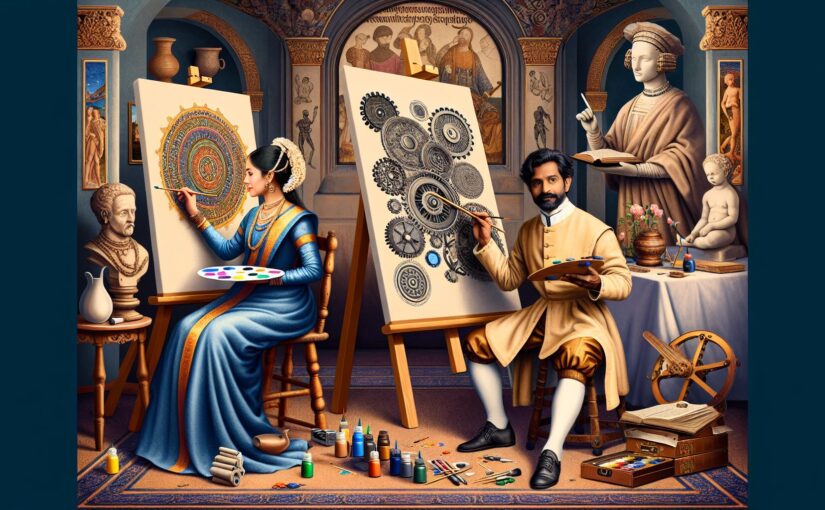
Artificial intelligence isn’t science fiction anymore. It’s here, and it’s getting weird in the best possible way. Tech enthusiasts are watching AI develop something unexpected: a creative streak. Let’s look at how AI is changing creative work, where machines have moved beyond being tools to becoming actual collaborators.
The Brushes and Bytes of AI Art
Picture walking into an art gallery where half the pieces were created by machines. Sounds bizarre, but it’s happening. AI systems using generative adversarial networks (GANs) and creative algorithms are making art that’s genuinely hard to dismiss. Art communities that used to turn their noses up at anything digital are starting to pay attention. Reluctantly, maybe, but still.
AI art isn’t just technically impressive. It’s actually interesting. These systems have studied classic movements like Impressionism and Cubism, then gone off and invented entirely new styles. Platforms like Dream by Wombo, DALL-E, and DeepArt.io are producing work that mixes Salvador Dalí’s surrealism with algorithmic weirdness. It’s like someone crossed Da Vinci with a supercomputer and let them loose in a studio.
Who Is the ‘Artist’?
Here’s where things get messy. Who gets credit for AI-generated art? The programmer who wrote the code? The algorithm itself? The person who typed in the prompt? Intellectual property lawyers are scrambling to figure this out. Van Gogh never had to split royalties with his paintbrush, but we’re in uncharted territory now.
From Script to Screen: AI in Storytelling
AI is also getting into writing, and honestly, it’s a little unsettling how good it’s getting. Machine learning systems can now create stories with actual narrative tension, humor, and character development. I’ve read AI-generated content that made me forget it wasn’t written by a human.
Can AI Write the Blockbuster Script?
Movie studios are experimenting with AI in their creative departments. These systems can predict what audiences will engage with, no focus groups needed. Screenwriters are starting to work with AI assistants, using tools like OpenAI’s GPT-3 to brainstorm dialogue and plot points.
The algorithms aren’t just recycling old tropes either. They’re actively avoiding clichés, building unique storylines, and creating paradoxical elements that feel surprisingly human. George Lucas and James Cameron might want to start looking over their shoulders.
AI-Powered Music: When Robots Jam
Music felt like the last bastion of purely human creativity. AI had other plans. Platforms like Jukedeck and Aiva are composing original pieces that could easily soundtrack your next road trip or the latest Marvel movie.
Is Auto-tune Outdated?
We’re not talking about simple beat-matching here. AI is creating full symphonies, arranging complex harmonies, and producing finished tracks. These systems are getting better at understanding human emotions and translating them into sound. Auto-tune is starting to look quaint by comparison. I wouldn’t be surprised if we’re already listening to AI compositions without knowing it.
The Written Word: When AI Puts Pen to Paper
AI writing tools are exploding right now. Love Haruki Murakami’s surreal narratives? There’s probably an algorithm somewhere trying to write the next one. Writing assistants like Jasper and Inferkit are blurring the line between human creativity and machine analysis.
From Blog Posts to Literary Classics
Can AI really capture the subtlety and atmosphere that makes literature work? The jury’s still out, but these tools are already helping writers brainstorm, structure stories, and translate between languages. A few years ago, AI writing felt robotic and constrained. Now it’s producing work that makes skeptics pause and novelists curious.
The Philosophical Encore: Creativity Unbound by Annotation
As someone who follows tech trends, watching AI develop creative abilities feels surreal. These systems are demonstrating traits we thought were uniquely human. But I can’t shake the question: is this real creativity, or just very sophisticated pattern matching? The answer probably depends on how you define creativity in the first place.
Redefining Creativity
Can machines actually create, or are they just really good at mimicking human patterns? I’m not sure anyone knows yet. But the quality of output isn’t the only thing that matters here. It’s about the new possibilities and perspectives that AI brings to creative work.
Conclusion: A Future of Collaborative Imaginings
We’re seeing a new kind of creative partnership between humans and AI. This feels like a genuine shift in how art gets made. AI isn’t just writing scripts or composing music anymore. It’s changing how we think about creativity itself.
In the right hands, AI-driven creativity might become the defining artistic movement of our time. Each piece tells its own creation story. There’s something fascinating about art that can say, “I made myself.” This creative renaissance powered by intelligent machines is just getting started, and I’m curious to see where it goes.