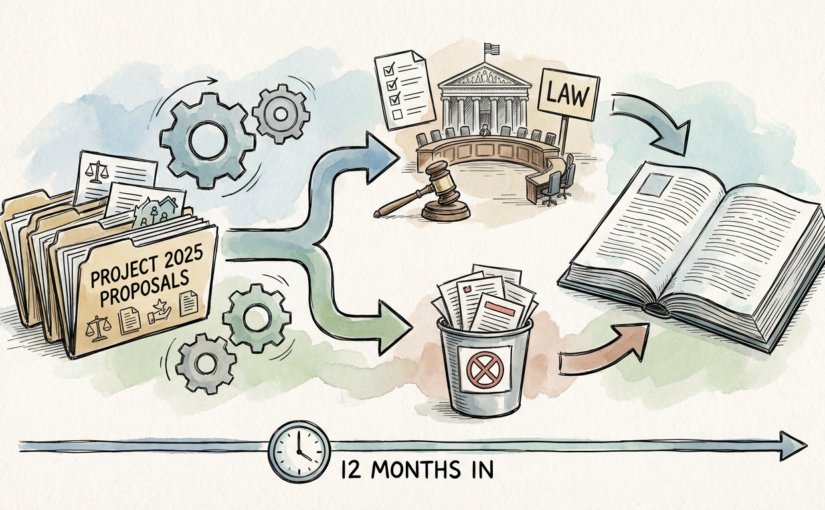
The Blueprint Gets Real: What We’re Actually Tracking
Twelve months ago, most people had never heard of Project 2025. The Heritage Foundation’s comprehensive policy document sat at 920 pages, outlining a systematic restructuring of 436 federal programs and agencies. It was dense, technical, and not the kind of thing that trends on social media. But by late 2025, 61% of Americans had heard of it, up from just 25% earlier that year. Suddenly, abstract policy blueprints felt very concrete. The question shifted from “what is this?” to “wait, is this actually happening?”
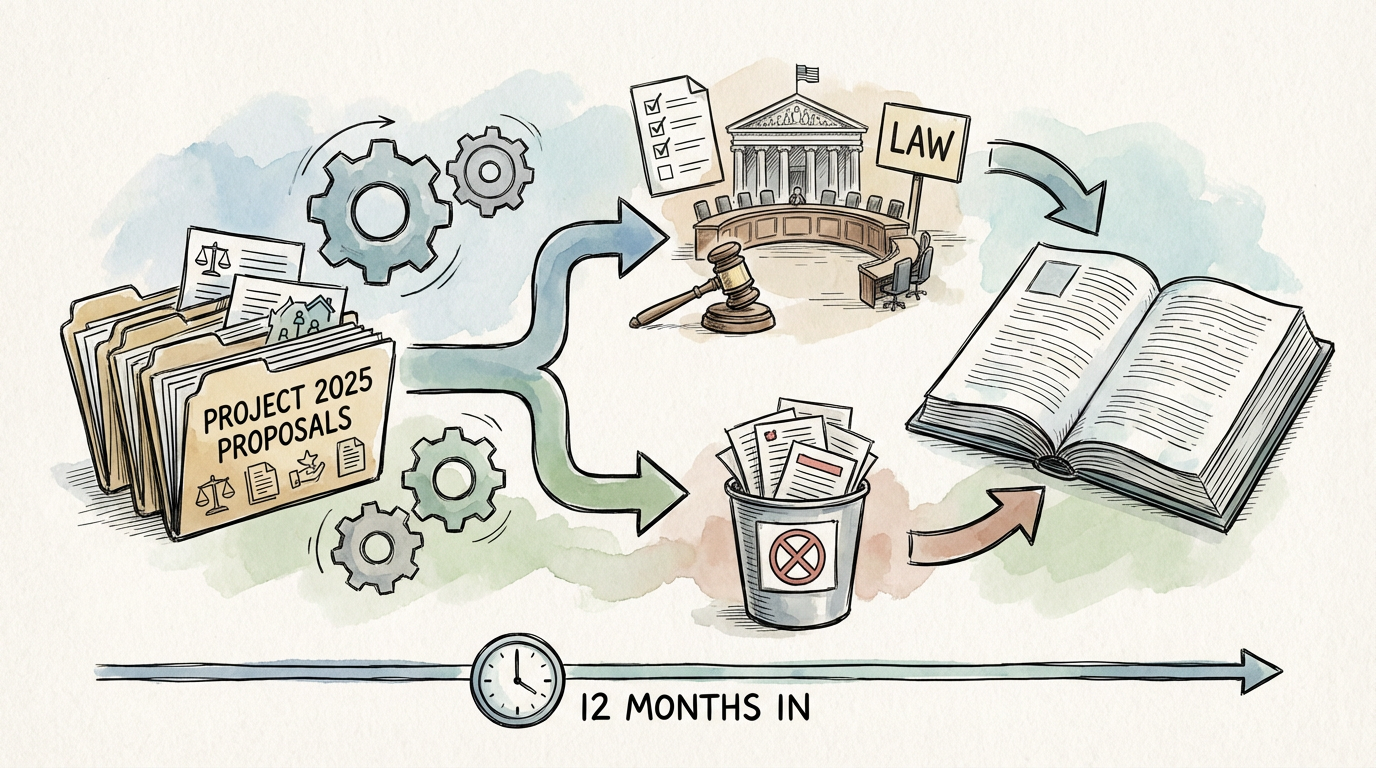
That’s where we find ourselves now. A year into implementation, we can actually measure what moved from proposal to reality. This isn’t about opinion or prediction. It’s about tracking the structural changes happening in our federal government right now. And the data tells a story more complicated than either enthusiastic supporters or alarmed critics would have you believe.

The 60-65% Reality: Most Proposals Advanced, But Not All at the Same Speed
According to tracking by The Washington Post, the Trump administration has implemented or initiated implementation of an estimated 60 to 65% of Project 2025’s first-year recommendations. That’s a significant number. Roughly two-thirds of the policy agenda moved from paper to action. But that headline number obscures something important: implementation doesn’t mean completion. Initiation isn’t the same as passage into law. Understanding the difference matters if you actually want to know what’s changed in your daily life.
The executive branch had natural advantages here. Executive orders are fast. They don’t require congressional approval or negotiation. Within the first 100 days, the Trump administration signed executive orders that directly mirrored Project 2025 language on eliminating diversity, equity, and inclusion programs, affecting more than 400 federal offices. That’s the kind of structural change that happens quickly. It requires a pen and a signature, nothing more.
You can track these changes in real time. The Washington Post Project 2025 Policy Tracker breaks down implementation status by policy area. Some items show “completed.” Others show “in progress.” Still others remain “not yet pursued.” That granular data tells you where the structural pressure actually is.
Where Congress Creates Friction: The Department of Education Case Study
Not everything in Project 2025 moves smoothly into reality. Some proposals require legislation, and that’s where Congress becomes the gatekeeper. Gateways can be slow. They can be locked. They can require compromises that change the original proposal beyond recognition.
Consider the dismantling of the Department of Education. This was a core Project 2025 recommendation, not a suggestion. But here’s the structural problem: you can’t abolish a cabinet department with an executive order. You need an act of Congress, which means 218 votes in the House and 51 in the Senate (or 60 if there’s a filibuster). You need legislators from swing districts and competitive states to vote for something that might cost them politically. A year in, the Department of Education still exists. Its structure has been pressured, its leadership changed, its focus shifted. But it wasn’t abolished, because Congress didn’t pass the legislation to make that happen.
This is the crucial distinction that gets lost in so much of the reporting on this. Executive power is real and sweeping. Legislative authority is slower and messier. When Project 2025 proposals hit the legislative requirement wall, they either slow down, shrink down, or don’t move at all. That friction point is where democratic institutions actually matter.
The Public Knows More Now, But Understanding Lags Behind Awareness
Pew Research Center data from late 2025 shows that awareness of Project 2025 skyrocketed. But knowledge isn’t the same thing as understanding. Many people have heard the name. Fewer can articulate which specific proposals became policy and which didn’t. That gap matters, because it affects how citizens can actually hold their government accountable.
This is where individual engagement becomes a practical necessity. You can’t evaluate what’s happening in federal policy if you only know headlines. You have to look at the data, track implementation, and distinguish between proposals that moved through on executive authority and proposals that needed legislative action and either stalled or changed shape. Pew Research Center Political Survey Data tracks what Americans think they know versus what they actually understand about policy implementation.
That gap isn’t a failure on your part. It’s built into the system. The information is dense, the processes are technical, and structural changes often happen slowly and quietly. Your job as a citizen isn’t to know everything about federal administration. It’s to know where to find reliable information and how to think about it critically.
What This Teaches Us About Governance and Power
Here’s what strikes me after looking at twelve months of Project 2025 implementation: policy proposals don’t become reality just because they’re written down. They become reality through specific, structural mechanisms. Some move fast. Executive authority moves fast. Others move slow. Legislative authority moves slow. Understanding which is which tells you where power actually sits.
Project 2025 revealed something useful about how American government works. It showed us that roughly 65% of executive-branch proposals can move forward through administrative action alone. It showed us that cabinet-level structural changes require legislative intervention. It showed us that the same people who wrote a 920-page blueprint still had to work within constraints that didn’t care about their intentions.
That’s not cynicism. That’s structural analysis, and it’s useful. When you understand how these systems work, you can predict where change will happen quickly and where it will stall. You can see where the pressure points are, identify where citizen input actually moves the needle, and know where to focus your attention if you want to engage directly with these processes.
Democracy in action isn’t always exciting. It’s often technical and slow. But it’s knowable. The information is out there, the mechanisms are trackable, and that means you have more power to understand what’s happening than you might think. What specific Project 2025 proposals do you want to understand better?