UNESCO’s World Heritage List gets presented as a neutral inventory of humanity’s shared treasures. But heritage is never neutral. The list—and the wider machinery of international heritage designation—encodes particular ideas about value, authenticity, and ownership. It asks us to believe that a temple in Cambodia, a wooden church in the Carpathians, and a modernist housing estate in Berlin all belong to the same category of “universal value.” Yet the moment we ask who defines that value, who benefits from the designation, and who gets displaced by it, the tidy framework starts to crack. For those of us working in critical heritage studies—especially in Eastern Europe, the Balkans, and the former Soviet Union—these questions are not abstract. They are written into the stones of rebuilt old towns, the fences around newly listed sites, and the silences in official narratives.
This article examines the politics of UNESCO heritage lists: their origins, their assumptions, and their uneven consequences. It is not an argument against preservation. It is an argument for looking more honestly at what preservation does—and to whom.
The Universal in “Universal Value”
The 1972 World Heritage Convention was born from a particular moment: post-war internationalism, Cold War cultural diplomacy, and a growing anxiety that modernization was erasing the past. Its language is lofty. Sites are inscribed for their “outstanding universal value,” a phrase that suggests a value beyond borders, beyond politics, beyond time. But the concept of universal value has a history. It emerged from European Enlightenment ideas about aesthetics, monumentality, and civilization. It was shaped by the same intellectual traditions that classified cultures into hierarchies and treated some material remains as “heritage” while dismissing others as debris.
In practice, “universal” has often meant “recognizable to a particular set of experts and institutions.” The early World Heritage List was heavily weighted toward Europe, monumental architecture, and sites associated with Christianity and classical antiquity. It took decades of criticism before the list began to include more sites from Africa, Asia, and Latin America, and before categories like cultural landscapes and industrial heritage gained legitimacy. Even now, the geography of inscription remains uneven. The politics of who gets listed—and who gets funded, visited, and protected—is inseparable from older patterns of colonial power and post-colonial aspiration.
The Expert Gaze
UNESCO relies on advisory bodies such as ICOMOS and IUCN to evaluate nominations. These organizations employ highly trained professionals—architects, archaeologists, conservators, ecologists. Their expertise is real. But expertise is also a form of power. The criteria for evaluation, the language of the nomination dossiers, and the standards of “authenticity” and “integrity” all reflect particular professional cultures. A site that does not fit the expected categories—too vernacular, too recent, too contested, too entangled with living communities—may struggle to be recognized.
Consider the case of vernacular wooden churches in the Carpathian region. Several are now listed, but the process of listing often required them to be framed as exceptional examples of a regional type, rather than as living places of worship embedded in local economies and seasonal rhythms. The listing can freeze a building in time, prioritizing its material fabric over the community that has maintained it for centuries. The expert gaze tends to see the object; the community lives the practice.
What the List Does to Places
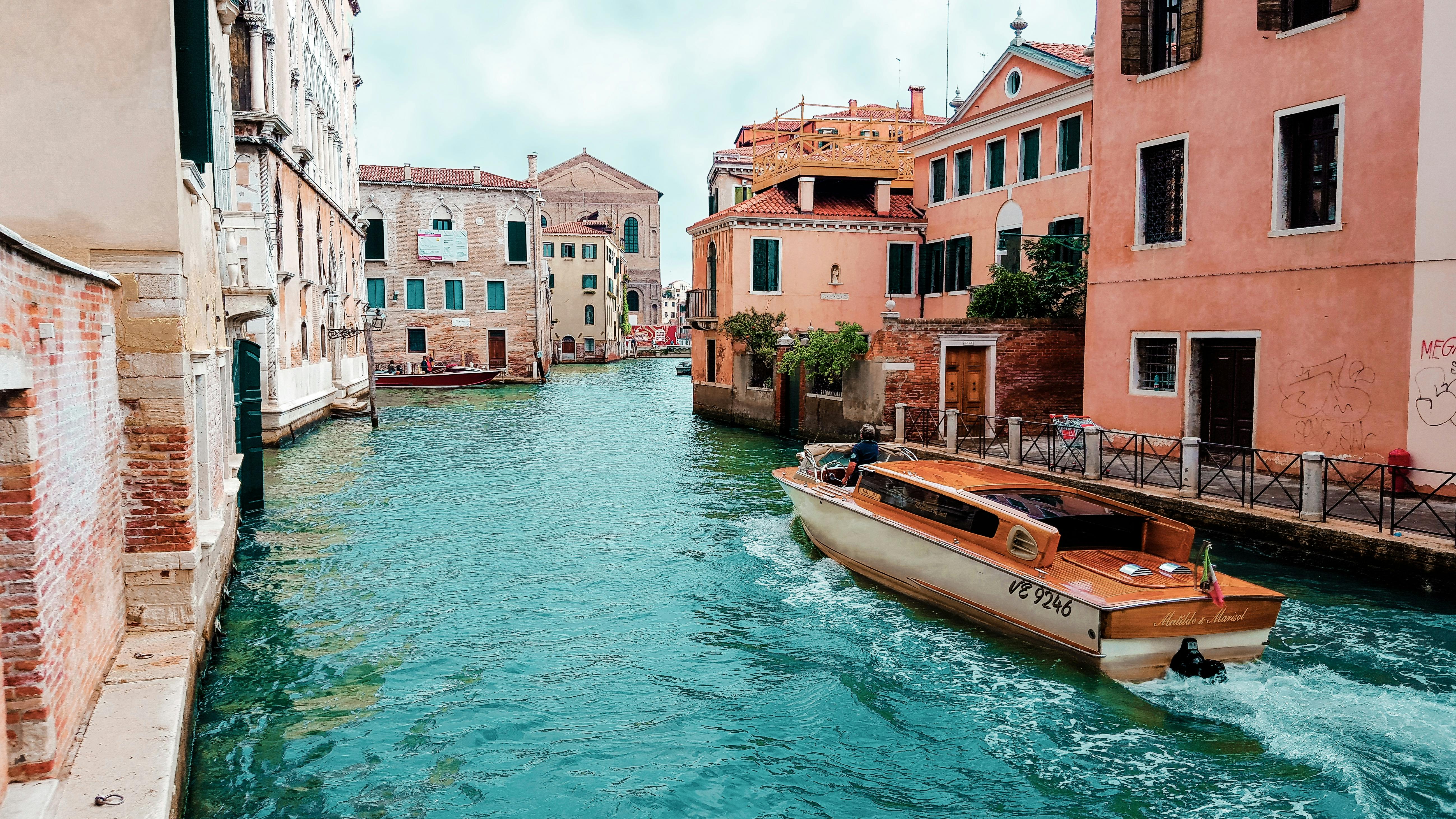
Inscription is often treated as an unambiguous good. It brings prestige, tourism, and access to international funding. But the effects are rarely so simple. Heritage listing can trigger rapid gentrification, displace residents, and transform living neighborhoods into stage sets for visitors. In cities across Eastern Europe and the Balkans, the restoration of historic centers after listing has sometimes pushed out the very people whose daily lives gave those centers their character.
Tourism is the most visible engine of this transformation. A UNESCO label is a powerful marketing tool. Visitor numbers can surge within a few years of inscription, overwhelming infrastructure and changing local economies. Restaurants replace bakeries. Souvenir shops replace hardware stores. Short-term rentals replace long-term housing. The place becomes a destination, and the destination begins to serve the visitor more than the resident.
This is not a new story. It has played out in Dubrovnik, in Prague, in Tallinn, in Kotor. But it is worth telling again, because the official narrative of heritage rarely acknowledges it. The list promises protection; it often delivers commodification.

Displacement and the Politics of Memory
In the former Soviet Union and the Balkans, heritage listing intersects with painful histories. What gets preserved—and what gets erased—is never just about architecture. It is about whose past is considered worthy of remembrance. In some post-socialist cities, the push to restore pre-war historic centers has involved the removal of socialist-era layers, as if the twentieth century were a stain to be scrubbed away. In others, the preservation of Ottoman-era buildings has become a flashpoint in nationalist debates about identity and belonging.
The World Heritage framework is poorly equipped to handle such conflicts. It prefers consensus. It asks states to present a coherent narrative of a site’s significance. But memory is rarely coherent. It is contested, fragmented, and unevenly distributed. When a site is listed, one version of its history is often elevated above others. The plaque goes up. The alternative stories fade.
Who Owns Heritage?
The World Heritage Convention is built on the principle of state sovereignty. States nominate sites within their borders. States are responsible for their protection. But this state-centric model sits uneasily with the idea of heritage as a shared human inheritance. It also sits uneasily with the reality that many communities have their own relationships to places—relationships that may not align with national narratives or international standards.
In the Balkans, for example, the same landscape may hold different meanings for different ethnic and religious communities. A monastery may be a sacred site for one group and a symbol of exclusion for another. A bridge may be celebrated as a masterpiece of Ottoman engineering and resented as a reminder of imperial rule. The UNESCO framework asks for a single statement of significance. The lived reality is plural.
This is not to say that international recognition is worthless. It can give local advocates a stronger hand, protect against demolition, and bring resources for conservation. But it can also entrench the authority of the state over the community, and of the expert over the inhabitant. The question is not whether heritage should be protected, but how—and on whose terms.
The Limits of the List
The World Heritage List is, by design, selective. It cannot include everything. But the process of selection is not transparent. It is shaped by diplomatic negotiations, national prestige, and the capacity of states to prepare complex nomination dossiers. Wealthier countries can hire consultants, conduct research, and lobby effectively. Poorer countries often cannot. The result is a list that reflects not only cultural value but also political and economic power.
There is also the problem of “World Heritage in Danger.” The list of endangered sites is meant to mobilize international attention and resources. But inscription on the danger list is often resisted by states, who see it as a mark of shame. The politics of danger listing—who gets listed, who avoids it, and what happens afterward—reveals the limits of the entire system. It is a system that depends on state cooperation, even when states are the primary threat to the sites in question.
Alternatives and Reforms
Critics of the World Heritage system have proposed various reforms. Some argue for a greater role for local communities in nomination and management. Others call for a shift away from the idea of “universal value” toward a more pluralistic understanding of heritage as multiple, situated, and contested. Still others suggest that the list itself should be less central—that UNESCO should focus more on capacity building, documentation, and the protection of heritage in conflict zones, rather than on the prestige economy of inscription.
There are also alternative frameworks. The Council of Europe’s Faro Convention, for example, emphasizes the right of communities to define their own heritage. It treats heritage not as a set of objects but as a process of meaning-making. This is a fundamentally different approach. It does not ask what a site is worth to humanity in the abstract. It asks what a place means to the people who live with it.
In Eastern Europe and the Balkans, where heritage has so often been mobilized for nationalist projects, the Faro Convention’s emphasis on participation and pluralism is especially relevant. It offers a way of thinking about heritage that does not require a single, authoritative story. It allows for disagreement. It allows for silence.
What a Critical Heritage Practice Looks Like
A critical heritage practice does not reject preservation. It asks harder questions about it. Who is making the decisions? Who is being consulted? Who is being left out? What are the economic consequences of listing? What are the political consequences? What stories are being told, and what stories are being suppressed?
These questions are not easy to answer. They require patience, humility, and a willingness to sit with ambiguity. They require us to accept that heritage is not a fixed thing but a field of struggle. The point is not to resolve the struggle but to understand it—and to make sure that the people most affected by heritage decisions have a real voice in them.

FAQ
Does UNESCO actually protect heritage sites?
UNESCO does not have its own enforcement mechanism. It relies on states to protect listed sites within their borders. Inscription can bring international attention and funding, but it does not guarantee protection. In some cases, listing has even accelerated development pressures by attracting tourism and investment. The real protection depends on national laws, local governance, and community engagement—not on the UNESCO label itself.
Why do some countries push so hard for World Heritage status?
World Heritage status is a mark of prestige. It can boost tourism, attract international funding, and strengthen national identity. For many states, especially in the post-socialist and post-colonial world, inscription is a way of claiming a place in the global cultural order. But the benefits are uneven. The costs—gentrification, displacement, loss of local control—are often borne by residents, while the prestige accrues to the state.
Can a site be removed from the World Heritage List?
Yes, though it is rare. A site can be delisted if it loses the qualities that justified its inscription. This has happened only a handful of times, most notably with the Dresden Elbe Valley in Germany, which was delisted in 2009 after a bridge was built across the valley. The threat of delisting is politically sensitive. States often resist it, even when a site is clearly deteriorating, because delisting is seen as a national embarrassment.
What is the difference between World Heritage and intangible heritage?
World Heritage refers to physical places—buildings, landscapes, archaeological sites. Intangible heritage refers to practices, traditions, and knowledge—music, crafts, rituals, oral traditions. UNESCO has separate lists for each. The distinction is useful, but it can also be misleading. Physical places are always entangled with living practices, and intangible heritage always has material dimensions. A critical approach tries to hold the two together rather than treating them as separate categories.
Conclusion: The List as a Mirror
The World Heritage List is often treated as a window onto the world’s treasures. It is more accurately a mirror—a reflection of the values, anxieties, and power relations of the people who created it. The list tells us what certain institutions, at certain moments, considered worth saving. It tells us less about the places themselves than about the politics of recognition.
For those of us who care about heritage in Eastern Europe, the Balkans, and the former Soviet Union, the task is not to abandon the list but to read it critically. To ask who is served by inscription, who is burdened by it, and what alternatives might look like. The goal is not a perfect list. It is a more honest conversation about what we value, why we value it, and what we are willing to sacrifice to keep it.
This article is part of an ongoing series on the politics of heritage designation. Future pieces will examine specific cases—the reconstruction of Warsaw’s Old Town, the contested listing of medieval tombstones in the Balkans, the fate of Soviet modernist monuments—and the broader question of who gets to decide what the past means. Read more in our critical heritage studies archive.