The Numbers Tell a Story About Incentives
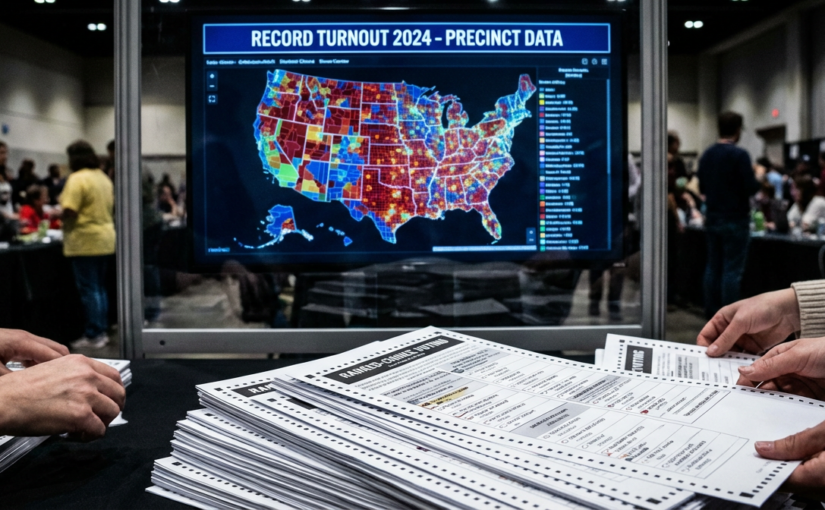
Let me start with the headline: As of January 2026, ranked-choice voting is being used in elections that cover over 13 million eligible voters across 17 states and Washington D.C. That’s a jump from 8 million voters just four years earlier. If you’re wondering whether this matters beyond the wonky satisfaction of watching electoral reform spread, stick with me. The real story isn’t in the state-level adoption numbers. It’s in what happens at the precinct level when candidates decide whether to run.
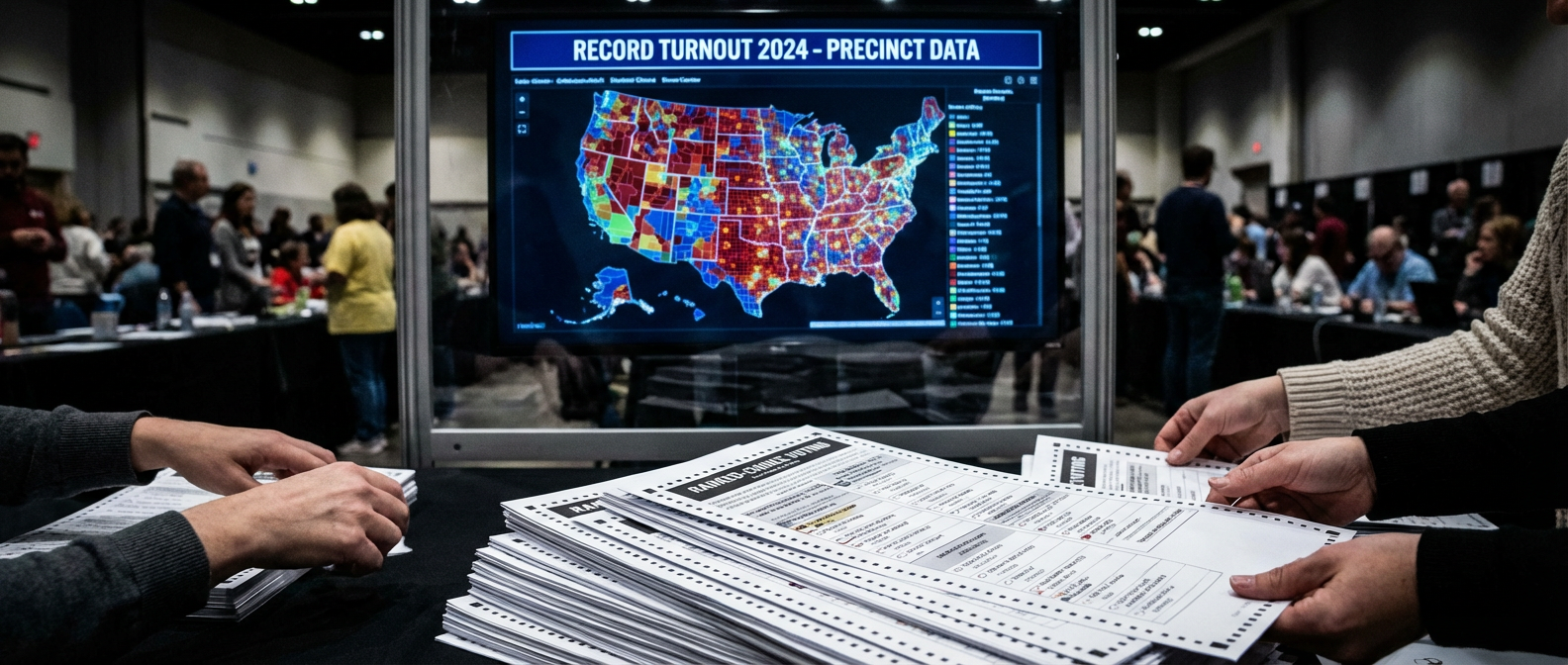
Here’s the thing about electoral systems that most people miss: they’re not neutral. They’re incentive machines. They shape who thinks “I could actually win this” and who decides the game is rigged against them before they even file their paperwork. Ranked-choice voting doesn’t just change how votes get counted. It changes the calculus for everyone thinking about entering a race.
When you remove the fear of the “spoiler effect,” you remove one of the most powerful barriers to candidacy for people outside the two-party structure. That’s not ideology. That’s economics. It’s about lowering the cost of entry into electoral politics.

Alaska Shows What Happens When The Rules Change
Alaska’s 2024 congressional elections are the clearest recent example we have. Under ranked-choice voting for the first time, Alaska saw a 6.2 percentage point increase in first-time candidates from non-major parties actually making it onto general election ballots compared to the 2020 cycle before RCV existed. Let that sink in. Same state. Same voters. Different rules. More diverse candidate pools.
This isn’t random. When voters can rank candidates in order of preference, a candidate running on a third-party line doesn’t automatically hand victory to their least-preferred major-party candidate. The strategic calculus that kept so many potential candidates on the sidelines simply evaporates. Suddenly, “I’m going to run” becomes a viable sentence for people it never was before.
You can dig into the specifics yourself through the FairVote RCV Election Results Database, where you’ll find precinct-by-precinct breakdowns showing exactly who ran and who made it through in RCV jurisdictions. The data is there. It’s waiting for you to look.
Women Candidates Benefit, And It’s Measurable
A 2025 study from the MIT Election Data and Science Lab found something that should reshape how we think about electoral reform. In ranked-choice voting jurisdictions, women candidates advanced past primary stages at a 19 percent higher rate compared to traditional plurality voting systems. Nineteen percent. That’s not a rounding error. That’s a structural advantage shift.
Why? Again, it’s about incentives and fear. In traditional plurality voting, the candidate math often punishes women candidates by creating a perception that they’re “splitting” a voter coalition. In ranked-choice systems, that pressure disappears. A woman candidate for city council isn’t competing in a zero-sum cage match where splitting the progressive vote means the conservative wins. She’s competing in a system where voters can express full preference orders. That changes everything about who thinks they can win.
If you want the full research breakdown, MIT Election Data and Science Lab: Ranked Choice Voting Research has published detailed analysis on this. The work is rigorous. The patterns are consistent across multiple election cycles.
Nevada’s Approval Sets Up the Biggest Test Yet
In November 2024, Nevada voters approved ranked-choice voting for statewide elections. This was the largest single-state RCV expansion in U.S. history by eligible voter count. We’re talking about millions of voters moving into an entirely different voting system. That’s not incremental. That’s a genuine turning point.
What happens next in Nevada matters to every state watching from the sidelines. Are candidate pools truly more diverse? Do campaigns have to shift strategy? Do voters actually understand how to use the system? These aren’t rhetorical questions. They’re the foundation for whether RCV spreads or stalls. Nevada is about to give us real-world answers at a scale we haven’t seen before.
The political economy of this is worth noting. Incumbent-protection systems are powerful. They work. When politicians benefit from barriers to entry, removing those barriers faces resistance. Nevada voters approved this anyway. That tells you something about how the appetite for electoral change has matured.
Portland’s Redesign Shows Systemic Change In Action
Portland, Oregon, implemented a new multi-member district ranked-choice voting system for its November 2024 city council elections. For the first time, they elected 12 council members from four geographic districts instead of the previous at-large system. This is more than just swapping the voting method. It’s a complete redesign of how representation works in a major city.
Multi-member districts with ranked-choice voting create conditions where different voter coalitions can actually achieve representation. A neighborhood that’s been locked out of at-large elections suddenly has a chance. A coalition of voters who want three different things but agree on enough to build a slate has room to maneuver. The incentive structure shifts from “win at all costs with 51 percent” to “build authentic coalition support.”
These changes ripple through precinct politics in ways that take time to fully measure. What we know now is that Portland voters chose to redesign their system from the ground up. That’s not nostalgia. That’s not ideology. That’s a community saying the current incentive structure isn’t working for them.
What You Should Do With This Information
If you live in a jurisdiction considering ranked-choice voting, the data we have now is strong enough to inform your local decision-making. We’re past the hypothetical phase. This is working in real elections with real consequences. We can see who runs. We can see who wins. We can see the patterns.
Start by looking up whether your state or city is considering RCV. Find out what the local debate sounds like. Talk to candidates in your area about whether they think the current voting system affects who decides to run. These conversations are happening in city halls and state legislatures right now, and your attention to them matters more than you probably realize.
We’re only starting to see what electoral systems actually do when you change them. Pay attention to what happens next in Nevada and Portland. The answers are going to be interesting.